For nurses, hospital staff, BPO/IT professionals, and anyone doing night shifts in Kerala.
Night shifts don't just make you "sleepy." They push your circadian rhythm out of sync, raising the risk of fatigue, mood symptoms, digestive problems, and performance errors. The good news: you can reduce the damage with a repeatable protocol—light, timing, naps, caffeine discipline, and smart recovery days.
This guide is designed for real Kerala schedules: 7 pm–7 am hospital shifts, 9 pm–6 am IT/BPO, and rotating rosters.
1. Why Night Shifts Break You (Even If You "Sleep Enough")
Your body clock is strongly controlled by light exposure and consistent timing. When you work nights and sleep during daylight, your brain receives mixed signals—"be awake" from morning light while you're trying to sleep.
Managing light and timing is the key lever.
NIOSH (CDC) training for nurses highlights practical measures:
- Dim light before sleep
- Reduce light on the way home
- Keep the bedroom very dark
- Stop caffeine several hours before the shift ends
2. Know Your Shift Type (Strategy Changes)
A) Permanent Night Shift (Best for Adaptation)
Goal: Shift your clock to a stable "night-awake/day-sleep" pattern using planned light exposure and strict sleep timing.
B) Rotating Shifts (Most Common — Toughest on the Body)
Goal: Minimize disruption, protect sleep quantity, and use "anchor sleep" on off days instead of trying to fully adapt each week.
3. The Kerala Night-Shift Protocol
Before Shift (2–3 Hours Before Start)
- Short nap (20–30 minutes) if you can—this improves alertness.
- Caffeine plan: Take caffeine early in the shift, not late. Caffeine half-life is 5–6 hours.
- Eat a balanced meal (protein + complex carbs). Don't start hungry.
During Shift (First Half vs Second Half)
- First half: Stay in brightly lit areas when possible—this improves alertness.
- Second half: Reduce bright light exposure where possible, so it's easier to sleep after duty.
- Avoid sugar-heavy snacks—choose higher-quality foods.
End of Shift + Commute Home (High-Risk Window)
- If you feel sleepy, drowsy driving is a real danger.
- If you're not driving: Reducing light exposure on the way home can help sleep.
After Shift (Home → Sleep)
- Keep light low; avoid screens for ~1 hour before sleep.
- Bedroom should be cool, quiet, very dark.
- If hungry, take a light snack, not a heavy spicy meal.
4. Quick Reset Schedules
Example: Nurse Shift 7 pm–7 am
- 4:30–5:00 pm: 20–30 min nap
- 6:00 pm: Meal + hydration
- 7 pm–12 am: Bright light/active tasks; caffeine here if needed
- 12 am–4 am: Light meal/snacks; avoid heavy/sugary foods
- 4 am onwards: Stop caffeine; reduce bright light
- 8:30 am: Home + dim light + wind-down
- 9:30 am–3:30 pm: Main sleep block
Rotating Shifts (Anchor Sleep Idea)
Even on off days, keep a consistent "anchor" sleep window (e.g., 2 am–7 am) so your clock isn't whiplashed every week.
5. Food Timing: What Helps Night Shift Metabolism
NIOSH advises that eating when your gut "expects sleep" can increase GI symptoms and metabolic risk. Practical guidance:
- Reduce intake between midnight and 6 am
- Choose high-quality foods
- Avoid sugar-rich low-fiber carbs when you need alertness
Kerala-Friendly Night-Shift Snacks That Work
- Nuts + yogurt
- Boiled eggs
- Fruit + peanut butter
- Wholegrain sandwich
- Vegetable soup
Avoid: Heavy biriyani at 3 am + sugary tea + energy drinks (sleep crash + reflux)
6. When Fatigue Becomes a Medical Problem
Adults typically need ~7+ hours sleep for health. If you're getting adequate time in bed but still have daily exhaustion, check for:
- Shift Work Sleep Disorder – persistent insomnia or excessive sleepiness linked to work schedule
- Anemia/Iron Deficiency – common in India, especially women
- Thyroid Dysfunction – fatigue, weight changes, palpitations
- Vitamin B12 Deficiency – fatigue + brain fog + tingling (common in Indian populations)
- Vitamin D Deficiency – high prevalence even among Indian healthcare professionals
- Sleep Apnea – snoring, choking, morning headache, daytime sleepiness
7. When to Consider Testing
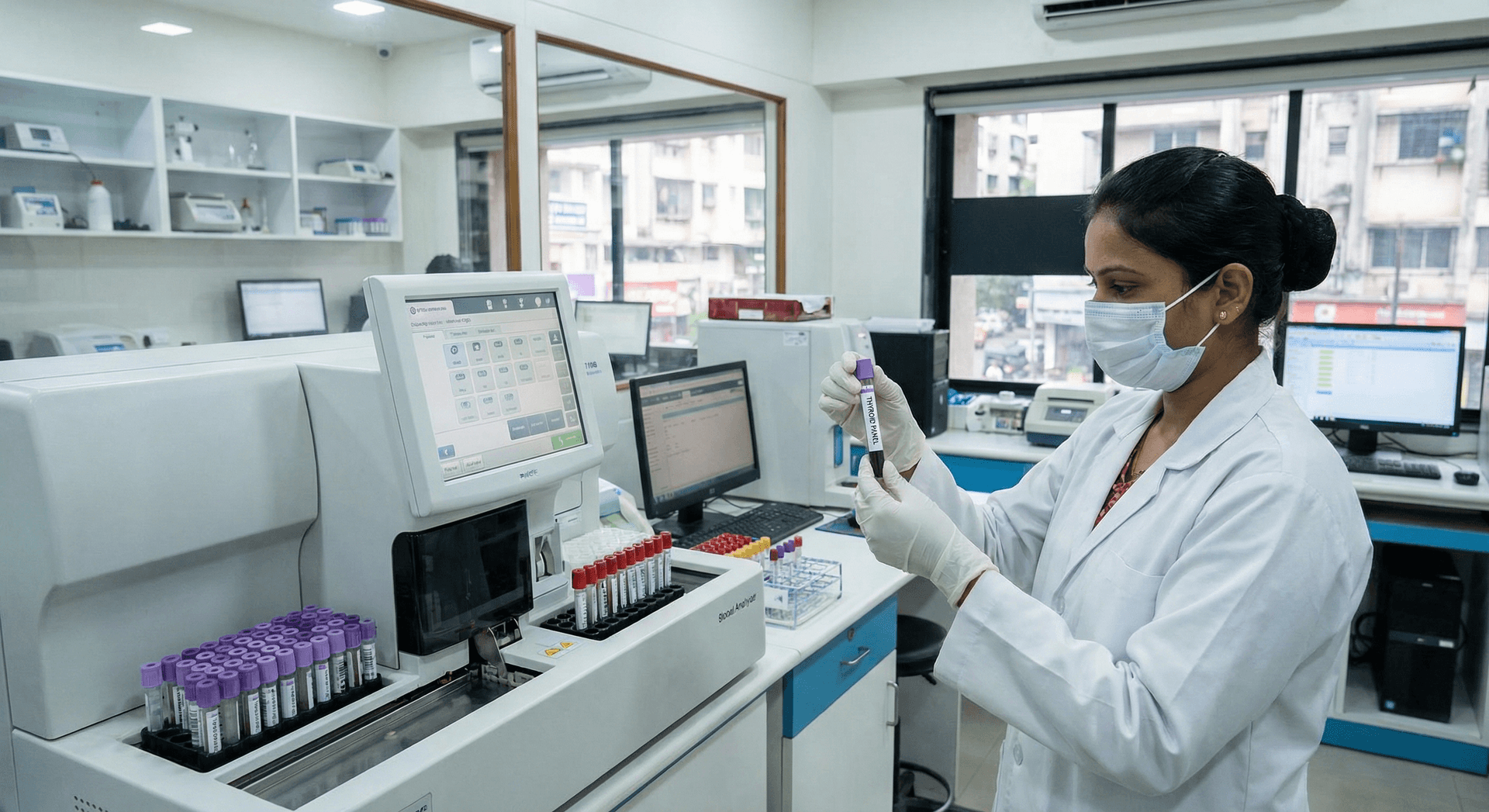
If you have 2–4 weeks of persistent fatigue, brain fog, low mood, body aches, or recurrent infections—especially with night shifts—consider a focused workup.
Core "Fatigue Panel" (High-Yield Basics)
- TSH – Thyroid screen
- Vitamin B12 – Common deficiency; neurologic symptoms overlap
- 25-OH Vitamin D – Common deficiency pattern in India
Add Based on Symptoms (Clinician-Guided)
- CBC / Ferritin – Anemia/iron deficiency
- Fasting Glucose / HbA1c – Shift work + metabolic risk
- LFT / RFT – If clinically indicated
Important: Tests don't "fix" shift work—your schedule/light/sleep plan does. Tests help you avoid missing treatable medical contributors.
8. Burnout Prevention (The Part Most People Skip)
- Keep at least one true recovery day weekly: daylight walk, social time, exercise.
- Don't use alcohol to "knock yourself out"—it fragments sleep and worsens recovery.
- If anxiety or low mood is persistent, treat it early—shift work is a known stress amplifier.
9. Your Next Step
Struggling with fatigue despite trying sleep fixes?
🏥 Book a Fatigue Panel at Magnus
TSH + B12 + Vitamin D + CBC
North Paravur | Irinjalakuda | Aluva
📞 Call Now: +91 89031 01010 💬 WhatsApp Us 📋 View Fatigue Panel
FAQ
1. Why do night shifts cause fatigue even if I sleep 7+ hours? Your body clock is controlled by light exposure. Sleeping during daylight sends mixed signals to your brain, disrupting deep sleep quality even if duration seems adequate.
2. What is the most important thing I can do to improve night shift sleep? Keep your bedroom very dark and reduce light exposure on your commute home. Light management is the single biggest lever for shift workers.
3. Should I take caffeine during night shifts? Yes, but only in the first half of your shift. Caffeine has a 5-6 hour half-life, so late caffeine will wreck your daytime sleep.
4. When should I get tested for fatigue causes? If you have 2-4 weeks of persistent fatigue despite adequate sleep time, consider testing for B12, Vitamin D, thyroid, and iron deficiency—all common in Indian populations.
Related Reading
Book your diagnostic test at Magnus Diagnostics — Kerala's most trusted diagnostic center.