A slip in the bathroom. A fall from a ladder. A motorbike accident.
Head injuries are incredibly common in Kerala. But the moment it happens, the panic sets in: “Is it serious? Do I need a scan?”
At Magnus Diagnostics, we handle emergency trauma cases daily. The golden rule is: It is better to be safe than sorry.
This guide explains what happens inside the skull after a fall and when you need to rush to the hospital using the "Canadian CT Head Rule" (the medical standard we follow).
🚩 The Danger Zone: When to Rush to the Hospital
Not every bump needs a scan. But if any of these happen after a head injury, go to the Emergency Room immediately:
- Loss of Consciousness: Even if it was just for a few seconds.
- Vomiting: More than once (Repeated vomiting suggests raised pressure in the brain).
- Confusion/Amnesia: If they ask the same question repeatedly or don't know where they are.
- Severe Headache: A headache that gets worse, not better.
- Blood or Fluid from Ears/Nose: This suggests a skull base fracture.
- Age 65+: Elderly patients have fragile blood vessels; even minor bumps can cause slow bleeds.
CT Brain: The First Line of Defense
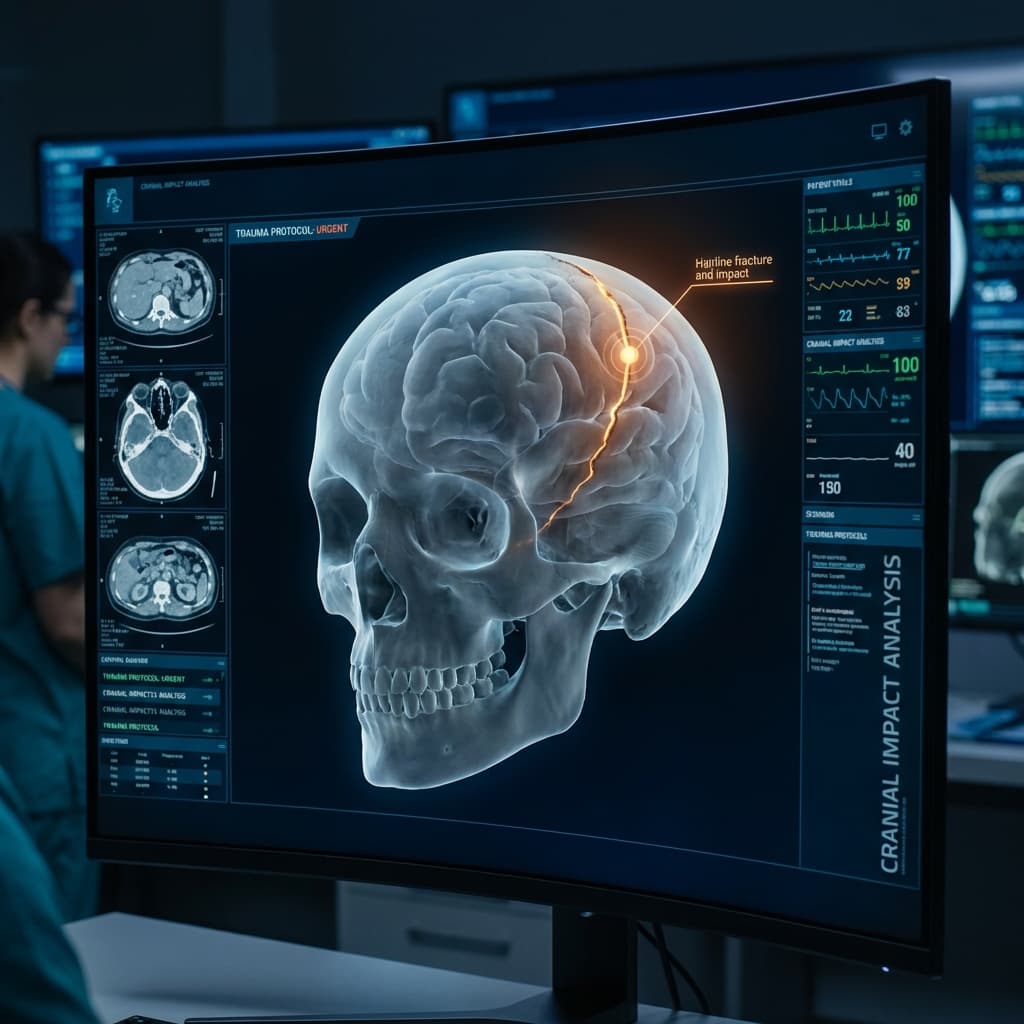
In trauma, CT is King. If you come to the casualty with a head injury, the doctor will order a CT Brain (Non-Contrast).
- Why CT? It is the fastest way (seconds) to see bone fractures and fresh blood (hemorrhage).
- What it shows:
- Extradural Hematoma: A fast bleed that needs urgent surgery.
- Subdural Hematoma: A slower bleed common in elderly people.
- Skull Fractures: Cracks in the bone.
What About MRI?
We rarely use MRI in the acute emergency phase because it takes too long. However, MRI is superior for:
- Diffuse Axonal Injury (DAI): Microscopic tearing of nerve fibers that CT can't see (common in high-speed accidents).
- Follow-up: If a patient is still confused weeks later, an MRI checks for subtle long-term damage.
The "24-Hour Watch" Protocol at Home
If the doctor says the injury is mild and sends you home, you are not fully clear yet. You must observe the patient for 24 hours.
- Wake them up: Every 3–4 hours, wake them up to ensure they are responsive.
- Check symptoms: Watch for slurring speech or weakness on one side.
- Rest: No screens, no work. Let the brain heal.
A Note on Helmets
In our years of practice, scanning thousands of accident victims, one truth stands out: Helmets save brains. The difference between a "bad headache" and "permanent brain damage" is often just 2cm of foam.
🏥 Magnus Diagnostics - Urgent Care
We prioritize head trauma cases for immediate reporting.
- Irinjalakuda
- North Paravur
📞 Emergency Helpline: +91 89031 01010
📍 Find Location | View All Services
Related Reading
Book your diagnostic test at Magnus Diagnostics — Kerala's most trusted diagnostic center.