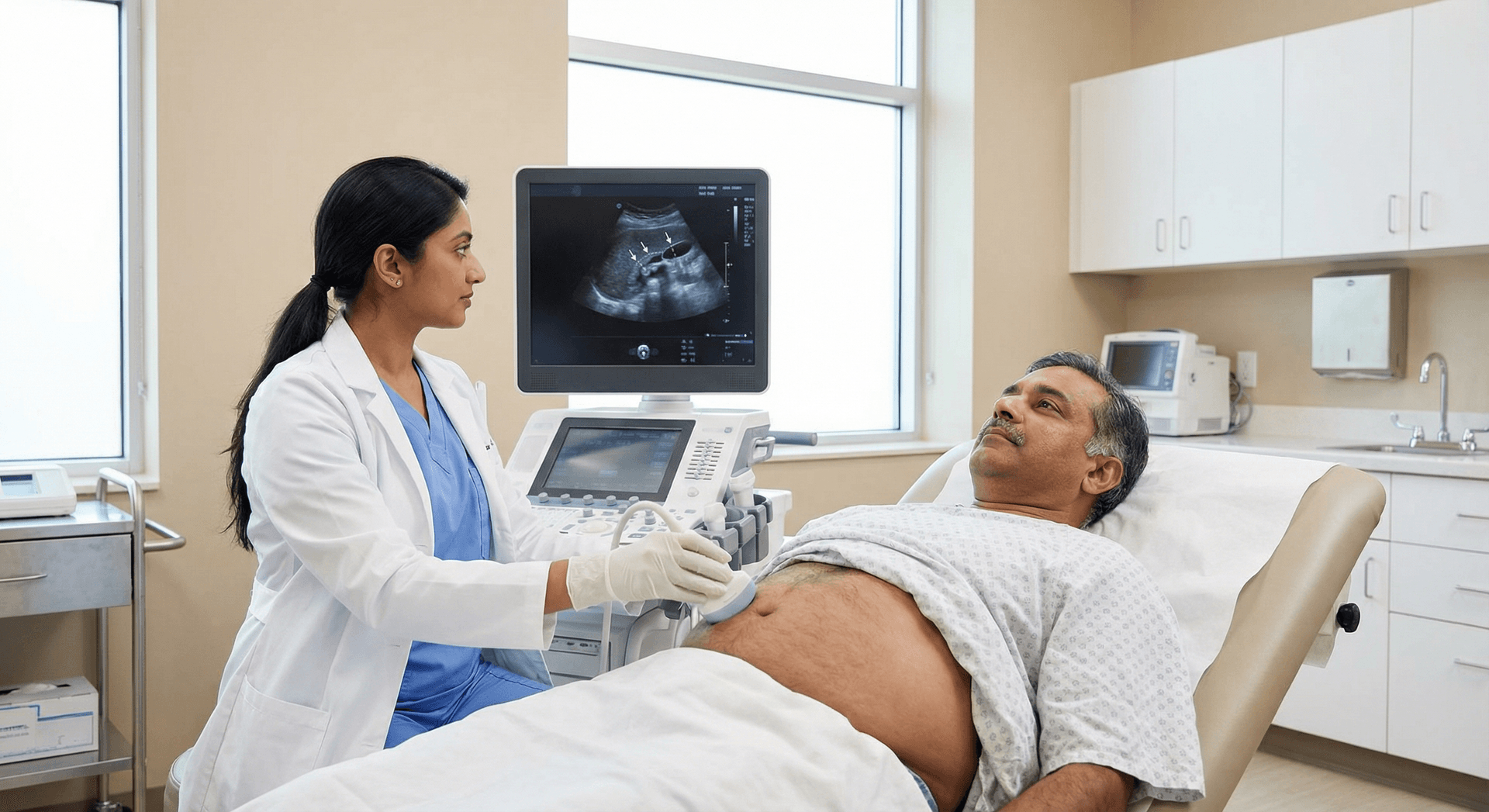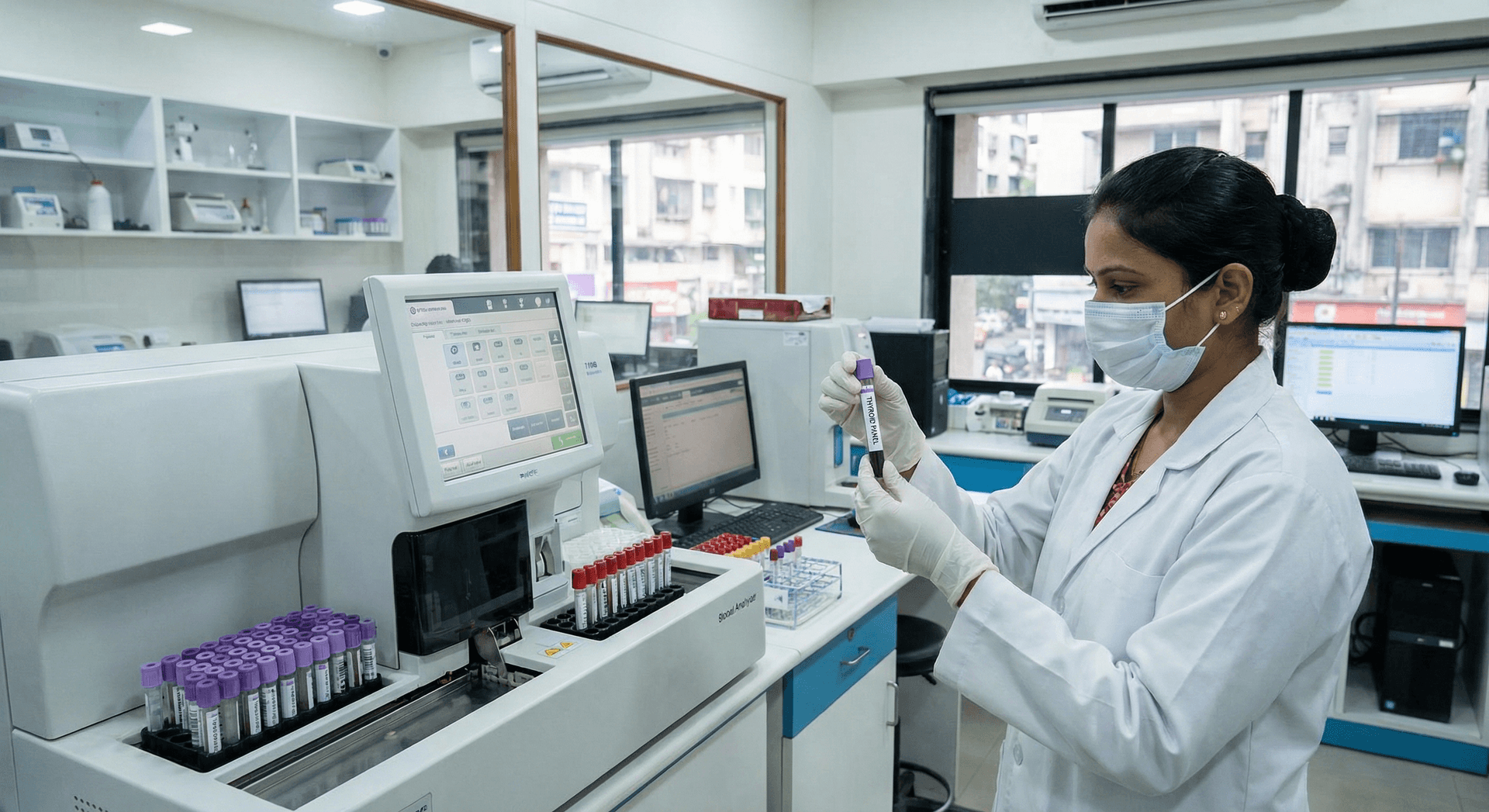
Thyroid problems are an epidemic in Kerala. I'm not exaggerating — almost every third woman I meet in our lab has some form of thyroid dysfunction. If you've been feeling tired, gaining weight despite eating less, or noticing your hair thinning, you're not alone. And you're not imagining it.
In my practice at Magnus Diagnostics, thyroid testing is one of the most common reasons patients walk through our doors. The good news? It's easy to diagnose with a simple blood test, and once we know what's going on, treatment is usually straightforward.
What Does Your Thyroid Actually Do?
Think of your thyroid as the thermostat for your entire body. This small butterfly-shaped gland in your neck produces hormones—T3 and T4—that control how fast your body burns energy. When it's working right, you feel energetic, your weight stays stable, and your mood is steady. When it's not, everything feels off.
The thyroid can malfunction in two ways: it can slow down (hypothyroidism) or speed up (hyperthyroidism). Both cause a cascade of symptoms that can mimic other conditions—which is why so many people go undiagnosed for years.
Understanding Thyroid Blood Tests
When you come to our centre in Thrissur for a thyroid check, we're usually looking at three main tests. Let me explain what each one tells us.
TSH: The Master Controller
TSH—Thyroid-Stimulating Hormone—isn't made by your thyroid at all. It's produced by your pituitary gland, which sits in your brain and acts like a supervisor telling your thyroid how much hormone to produce.
Here's how I explain it to patients: if your TSH is high, your brain is shouting at your thyroid because it's not making enough hormone. That means hypothyroidism. If TSH is low, your brain has stopped asking because your thyroid is already overproducing—that's hyperthyroidism.
TSH is the most sensitive test we have. It's usually the first thing we check, and often the only test we need for screening.
Free T3 and Free T4: The Actual Hormones
T4 (thyroxine) is what your thyroid makes most of. It's like a storage form—relatively inactive until your body converts it to T3 (triiodothyronine), which is the active hormone your cells actually use.
When we measure "Free" T3 and T4, we're looking at the unbound hormone floating in your blood—the part that's actually available to your tissues. This gives us a clearer picture than total hormone levels.
In practice, I usually order Free T4 along with TSH for initial screening. Free T3 comes in handy when we're dealing with hyperthyroidism or when the TSH and T4 results don't quite add up.
Anti-TPO: The Autoimmune Marker
If your doctor suspects autoimmune thyroid disease—Hashimoto's is the most common cause of hypothyroidism in India—we'll check Anti-TPO antibodies. When this number is elevated, it means your immune system is attacking your own thyroid. It's not something to panic about, but it helps explain why your thyroid stopped working and guides long-term management.
Hypothyroidism vs Hyperthyroidism: What You're Actually Feeling
I've had patients come in convinced they're just "getting older" or "stressed" when they're actually dealing with a thyroid problem. Here's what to watch for:
Hypothyroidism (Underactive Thyroid):
- Fatigue that doesn't improve with rest
- Weight gain despite eating less
- Feeling cold when others are comfortable
- Hair loss, especially outer eyebrows
- Dry skin and brittle nails
- Constipation
- Depression or low mood
- Heavy, irregular periods
Hyperthyroidism (Overactive Thyroid):
- Nervousness and restlessness
- Weight loss despite increased appetite
- Heat intolerance and excessive sweating
- Rapid heartbeat or palpitations
- Thinning hair
- Frequent bowel movements or diarrhea
- Anxiety and irritability
- Light or missed periods
The tricky part? Many of these symptoms overlap with other conditions. That's why we don't guess—we test.
Normal Ranges: What Your Numbers Mean
Here are the typical reference ranges we use at our lab:
For most adults, TSH falls between 0.4 and 4.0 mIU/L, while Free T4 ranges from 0.8 to 1.8 ng/dL and Free T3 from 2.3 to 4.2 pg/mL. An Anti-TPO above 35 IU/mL suggests autoimmune thyroid disease. Pregnancy targets are different, and some labs use slightly different ranges.
But here's what I always tell patients: numbers are just numbers. We interpret them in context of your symptoms, age, and overall health. A TSH of 4.5 in someone with classic hypothyroid symptoms means something different than the same number in someone who feels perfectly fine.
When Should You Get Tested?
Don't Google your symptoms until you panic. But if you're experiencing persistent fatigue, unexplained weight changes, hair loss, or mood swings, it's worth checking. I also recommend testing if:
- You're over 35 (especially women)—annual screening catches problems early
- Thyroid disease runs in your family
- You're pregnant or planning pregnancy
- You have diabetes, autoimmune disease, or a goitre
- You take medications like lithium or amiodarone
- You've had radiation to your neck
The test itself is simple: a quick blood draw, no fasting required. You can eat normally and take your medications as usual. Just avoid biotin supplements for 24–48 hours before—they can interfere with the results.
Thyroid Test Cost at Magnus Diagnostics
At our laboratory in Thrissur, we've kept thyroid testing affordable because we know how common these problems are:
TSH alone costs ₹300—perfect for quick screening or routine monitoring when you're already on medication. The full Thyroid Profile, which includes TSH plus Free T3 and Free T4, costs ₹600 and gives us the complete picture we need for initial diagnosis. If we suspect autoimmune disease, we add Anti-TPO antibody testing as an add-on.
We offer thyroid testing at our Irinjalakuda, North Paravur, Pullur, and Ashtamichira centers. Our fully automated lab delivers most results within 2–4 hours, sent directly to your phone via WhatsApp and email.
If you can't make it to the centre, we offer home collection free within 5 km. Just call us, and we'll send someone to your door.
Making Sense of Your Results
Once you have your numbers, here's what they typically mean:
- TSH high, Free T4 low → Hypothyroidism. Treatment is usually straightforward with levothyroxine, a synthetic thyroid hormone.
- TSH low, Free T4 high → Hyperthyroidism. This needs further investigation and treatment to slow down your overactive thyroid.
- TSH high, Free T4 normal → Subclinical hypothyroidism. We discuss whether treatment is needed based on your symptoms and risk factors.
- TSH low, Free T4 normal → Subclinical hyperthyroidism. Usually monitored, but may need treatment depending on the cause.
Never adjust your thyroid medication or start treatment based on lab results alone. Always discuss with your doctor—we interpret these numbers in context of your entire clinical picture.
The Bottom Line
Thyroid problems are incredibly common in Kerala, especially among women. The symptoms can be vague and frustrating, but the diagnosis is simple: a blood test that takes minutes and costs just ₹300–₹600 at our lab.
If you've been feeling off—tired, weight changes, hair loss, mood swings—don't write it off as stress or aging. Get tested. In my experience, most patients feel dramatically better once we identify and treat the problem.
Ready to check your thyroid? Call us at +91 89031 01010 or visit our laboratory services page. We're here to help, whether you walk into our centre or we come to you with home collection.