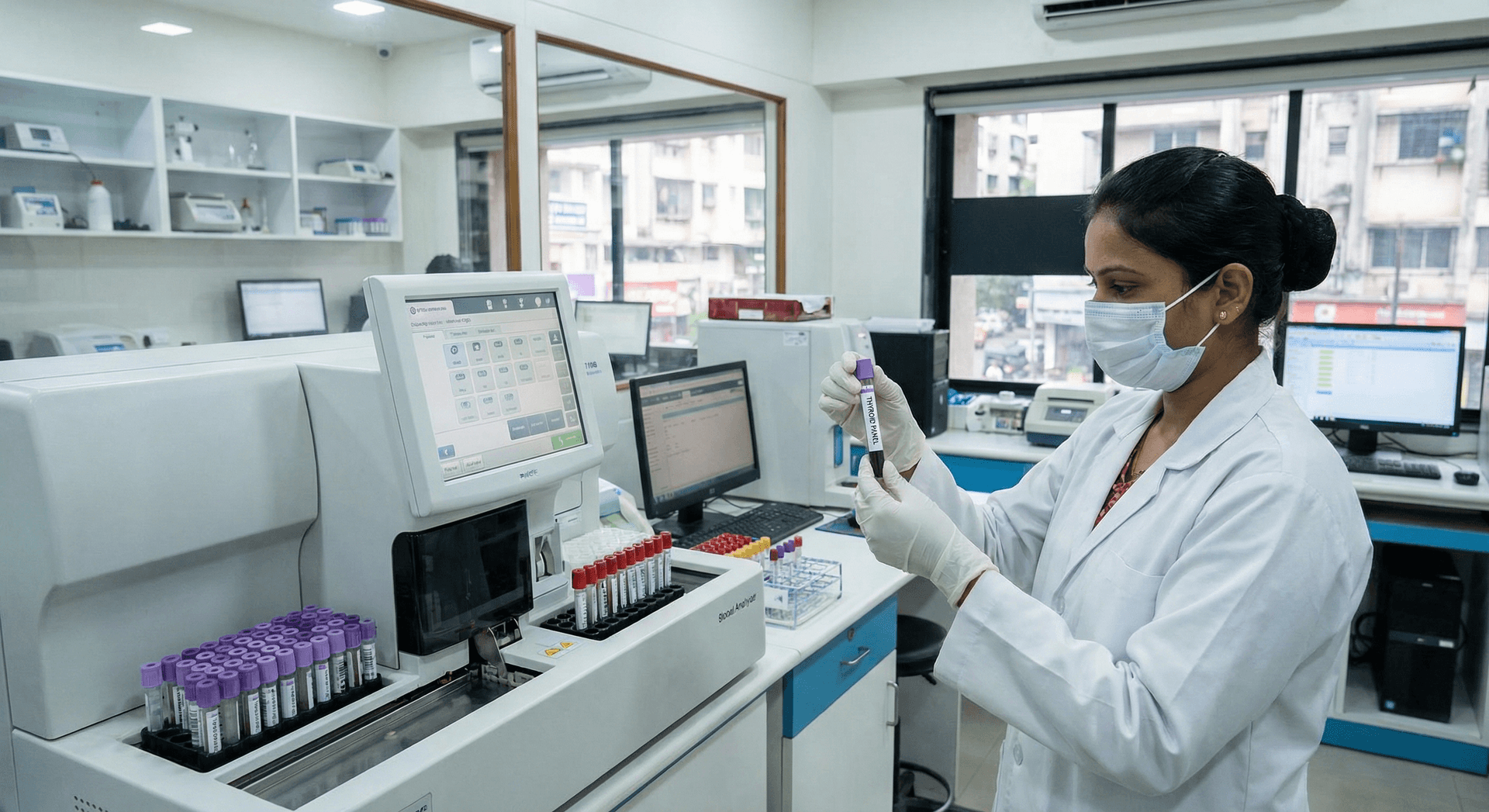
Here's something that still surprises my patients — in a country with 300+ days of sunshine, nearly 70% of Indians are Vitamin D deficient. I see this every day in our lab at Magnus Diagnostics. Patients come in complaining of fatigue, bone pain, or frequent infections, and when we check their Vitamin D, it's almost always low.
The irony isn't lost on me: we're living in one of the sunniest places on earth, yet we're all walking around deficient. In Kerala especially, I've noticed this pattern—patients who work indoors, cover up when they go outside, and rarely see direct sunlight. By the time they come to us, they're often surprised to learn their "tiredness" or "weakness" has a simple explanation.
Why Vitamin D Matters More Than You Think
Vitamin D isn't just about bones—though that's important enough. In my practice, I've seen how low levels affect everything from your energy to your immune system.
Bone Health: This is what most people know about. Vitamin D helps your body absorb calcium. Without it, your bones become weak and brittle. I've seen patients in their 40s and 50s with bone density that looks like someone decades older—all because of untreated deficiency.
Muscle Function: Low Vitamin D causes muscle weakness. Elderly patients especially are at risk of falls, and I've had patients whose "weakness" completely resolved once we corrected their levels.
Immunity: Your immune system needs Vitamin D to function properly. Patients with low levels get sick more often—more colds, more infections, slower recovery.
Mood: There's a strong link between Vitamin D and mental health. Low levels are associated with depression and low mood. I'm not saying it's a cure-all, but correcting deficiency often helps.
Heart and Metabolism: Research shows Vitamin D influences blood pressure, diabetes risk, and cardiovascular health. It's all connected.
Signs You Might Be Deficient
Many patients come to our centre in Thrissur with vague symptoms they've been ignoring. Here's what I see most often:
- Fatigue that doesn't improve with rest—the kind where you wake up tired
- Muscle weakness or aches, especially in the legs and back
- Bone pain—patients describe it as a deep ache in their back, hips, or legs
- Frequent infections—colds, flu, urinary tract infections that keep coming back
- Low mood or depression
- Hair loss or thinning
- Delayed wound healing—cuts and bruises take forever to heal
- Joint pain that's often mistaken for arthritis
The problem? Many people have no obvious symptoms until deficiency is moderate or severe. That's why I recommend testing, especially if you're over 50, obese, or spend most of your time indoors.
Why India Has Such High Deficiency Rates
This is the question patients always ask: "How can I be deficient when there's so much sun?"
The answer is complicated. Yes, we have sunshine. But:
Indoor Lifestyle: Most of us work in offices, live in air-conditioned spaces, and spend our free time indoors. When was the last time you sat in direct sunlight for 15 minutes?
Skin Tone: Darker skin has more melanin, which protects against UV damage but also reduces Vitamin D production. Indians need more sun exposure than lighter-skinned populations to make the same amount.
Covering Clothing: Traditional dress covers most of the body, limiting skin exposure. Even modern clothing often covers arms and legs.
Air Pollution: Particles in the air block UV-B rays—the specific wavelength needed for Vitamin D synthesis. In cities, this is a real problem.
Diet: Natural food sources are limited—mainly fatty fish, egg yolks, and fortified foods. Vegetarian diets are especially low in Vitamin D.
Age: As you get older, your skin makes less Vitamin D, and absorption may decrease.
Obesity: Vitamin D gets stored in fat tissue, making it less available in the bloodstream. Obese patients often need higher doses.
Understanding Your Vitamin D Level
When you get tested at our lab, we measure 25-hydroxyvitamin D (25-OH Vitamin D). This reflects both what you get from food and what your skin makes from sunlight—the best indicator of your overall status.
Here's how we interpret the numbers:
If your level is below 12 ng/mL, you're deficient and usually need supplementation. Levels between 12 and 20 ng/mL are insufficient—you'll often need supplements, but we'll discuss the best approach with your doctor. Once you're between 20 and 50 ng/mL, you're in the sufficient range and can maintain this with diet and sensible sun exposure. Levels above 50 ng/mL are rare and may mean you need to reduce your supplement dose. Note: Some labs use nmol/L. 20 ng/mL is approximately 50 nmol/L.
The test itself is simple—just a blood draw, no fasting required. We typically have results ready within 4–6 hours.
How We Treat Vitamin D Deficiency
When patients come to our centre with low Vitamin D, here's what I usually recommend:
Supplements: Most people need cholecalciferol (D3) supplements. The dose depends on how low you are. For maintenance, 1,000–2,000 IU daily is common. If you're deficient, we might start with 4,000–6,000 IU for 8–12 weeks, then switch to maintenance. Always take supplements under medical supervision—too much can be harmful.
Sun Exposure: I tell patients to aim for 10–15 minutes, 2–3 times per week, with arms and legs exposed. Mid-morning or late afternoon is best—avoid the harsh midday sun. And yes, you need to skip sunscreen for those few minutes (I know, it sounds counterintuitive, but that's how it works).
Diet: Fatty fish like salmon and mackerel, egg yolks, and fortified milk or cereals help, but they're usually not enough on their own if you're already deficient.
The key is consistency. I've had patients who take supplements for a month, feel better, then stop—and their levels drop right back down. This is a long-term commitment.
Who Should Get Tested?
In my practice, I recommend Vitamin D testing if you:
- Feel persistently tired or weak
- Have bone or muscle pain
- Get frequent infections
- Are over 50
- Are obese
- Have dark skin or limited sun exposure
- Are pregnant or breastfeeding
- Have osteoporosis or osteopenia
- Take steroids long-term
- Have kidney or liver disease
If you're in Kerala and spend most of your time indoors—which describes most of us—it's worth checking. The test costs ₹800 at our lab, and it might explain symptoms you've been ignoring.
Vitamin D Test Cost at Magnus Diagnostics
At our laboratory, the Vitamin D (25-OH) test costs ₹800. Results are typically ready within 4–6 hours and delivered digitally via WhatsApp and email.
If you're concerned about bone health, we also offer our OrthoFit package (₹1,600), which includes Vitamin D, Vitamin B12, Calcium, Phosphorus, and other bone-related tests. It's a comprehensive look at your bone health in one go.
We have labs at Irinjalakuda, North Paravur, Pullur, and Ashtamichira. If you can't make it to the centre, home collection is free within 5 km—just call +91 89031 01010 to book.
The Bottom Line
Vitamin D deficiency is everywhere in India, despite all our sunshine. It causes fatigue, weakness, bone pain, and poor immunity—symptoms many people write off as "normal" or "stress."
The good news? It's easy to diagnose with a simple blood test, and treatment is straightforward. Most patients feel dramatically better once we correct their levels.
If you've been feeling tired, weak, or just "off," don't assume it's normal. Get tested. At ₹800, it's a small price to pay for answers—and potentially, your health.
Ready to check your Vitamin D? Call us at +91 89031 01010 or visit our laboratory services page. We're here to help, whether you walk into our centre or we come to you.