When a patient comes in with sudden abdominal pain, the first question I ask isn't which scan — it's what kind of pain. Is it sharp or dull? Where exactly? Does it come and go, or is it constant? These details help me decide whether we start with ultrasound or go straight to CT.
Both tests have their place. Ultrasound is radiation-free, quick, and often the perfect first step. CT gives us detailed cross-sectional images when we need more information. Let me explain when we use each, and why your doctor might choose one over the other.
The Quick Comparison: Two Different Tools
Think of ultrasound as the gentle investigator—no radiation, safe for pregnancy, great for seeing organs like the gallbladder and kidneys. CT is the detailed detective—more information, but it uses X-rays.
Ultrasound uses sound waves instead of radiation, making it completely safe at any stage of pregnancy. It typically takes 10–20 minutes and excels at imaging the gallbladder, liver, kidneys, uterus, and ovaries. The main limitation is that it can be affected by obesity or bowel gas blocking the view. CT scans use X-rays, so they involve radiation exposure and should be avoided during pregnancy unless absolutely essential. They're faster at 5–15 minutes and are better for detailed views of the bowel, pancreas, appendix, blood vessels, and complex cases. CT is less affected by body habitus, but costs more—typically ₹4,000–₹8,000+ compared to ultrasound starting from ₹800.
When Ultrasound Is the First Choice: The Radiation-Free Option
In my practice at Magnus Diagnostics, ultrasound is often where we start. It's radiation-free, which means we can use it safely in pregnancy and repeat it as needed without concern.
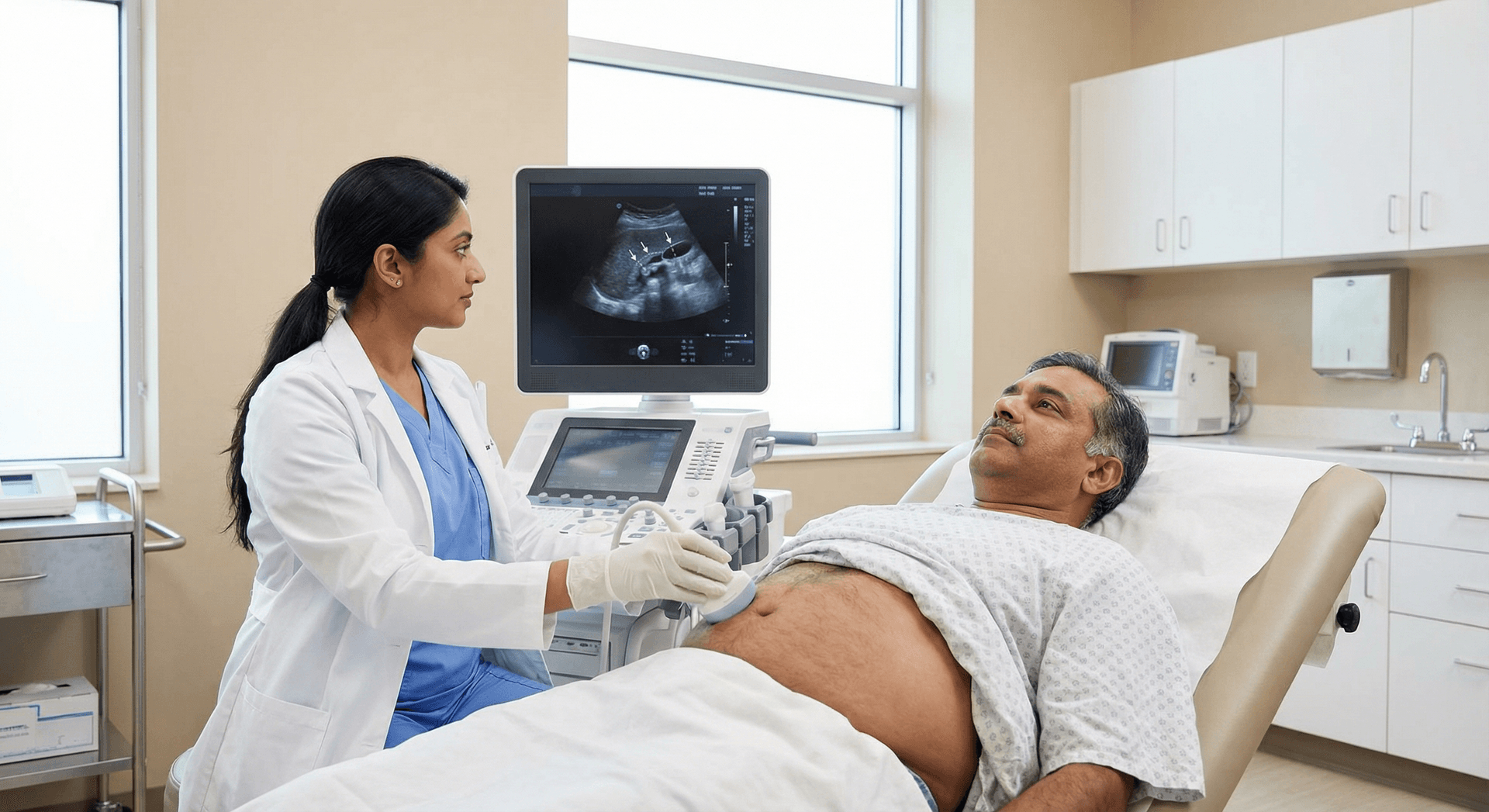
Gallbladder Problems: This is ultrasound's sweet spot. Gallstones show up beautifully—bright white spots that cast shadows. We can see if the gallbladder is inflamed (cholecystitis), if stones are blocking the bile ducts, or if there's fluid around it. For gallbladder issues, ultrasound is usually all we need.
Liver: Ultrasound is excellent for fatty liver—one of the most common findings I see in Kerala. We can also see liver cysts, masses (for initial screening), cirrhosis, and signs of portal hypertension. If something suspicious shows up, we might follow with CT or MRI, but ultrasound is a great first look.
Kidneys and Urinary Tract: Kidney stones, hydronephrosis (swollen kidney), cysts, and bladder problems—ultrasound handles these well. For kidney stones, we can see their size and location. For the bladder, we need it full (drink water before the scan), but then we get a clear view.
Female Pelvis: Ovarian cysts, uterine fibroids, pregnancy (all trimesters), ectopic pregnancy—ultrasound is the standard. It's safe, detailed, and doesn't use radiation. For pelvic pain, it's usually our first test.
Pancreas (Limited): The pancreas is tricky with ultrasound—bowel gas often blocks our view. We can see large masses or pseudocysts, but for detailed pancreatic imaging, CT is usually better.
Spleen: We can check size, look for cysts or masses, and assess trauma (when the patient is stable).
At our centres, abdominal ultrasound starts from ₹800 at Irinjalakuda, North Paravur, and Pullur. We offer 3D/4D imaging and have a female radiologist available on request.
When CT Is Needed: The Detailed View
Sometimes ultrasound doesn't give us clear answers. That's when we need CT.
When Ultrasound Is Inconclusive:
- Obesity limits penetration—sound waves don't travel well through thick tissue
- Bowel gas obscures organs—especially the pancreas and parts of the bowel
- Patient can't tolerate the position needed for good views
Specific Conditions Where CT Excels:
- Appendicitis: CT is very accurate. Ultrasound can work in children and thin adults, but CT is the gold standard.
- Bowel obstruction or perforation: CT shows the entire bowel clearly, including where it's blocked or if there's a hole.
- Pancreatitis: Both acute and chronic—CT shows the pancreas, surrounding inflammation, and complications.
- Diverticulitis: Inflammation in the colon—CT shows it clearly.
- Abdominal abscess: Collections of pus—CT shows exactly where they are.
- Trauma: Multi-organ assessment—one scan shows everything that might be injured.
- Cancer staging: Checking lymph nodes, spread to other organs—CT gives us the full picture.
Vascular Problems:
- Mesenteric ischemia (reduced blood flow to intestines)
- Aortic aneurysm
- CT angiography (detailed blood vessel imaging)
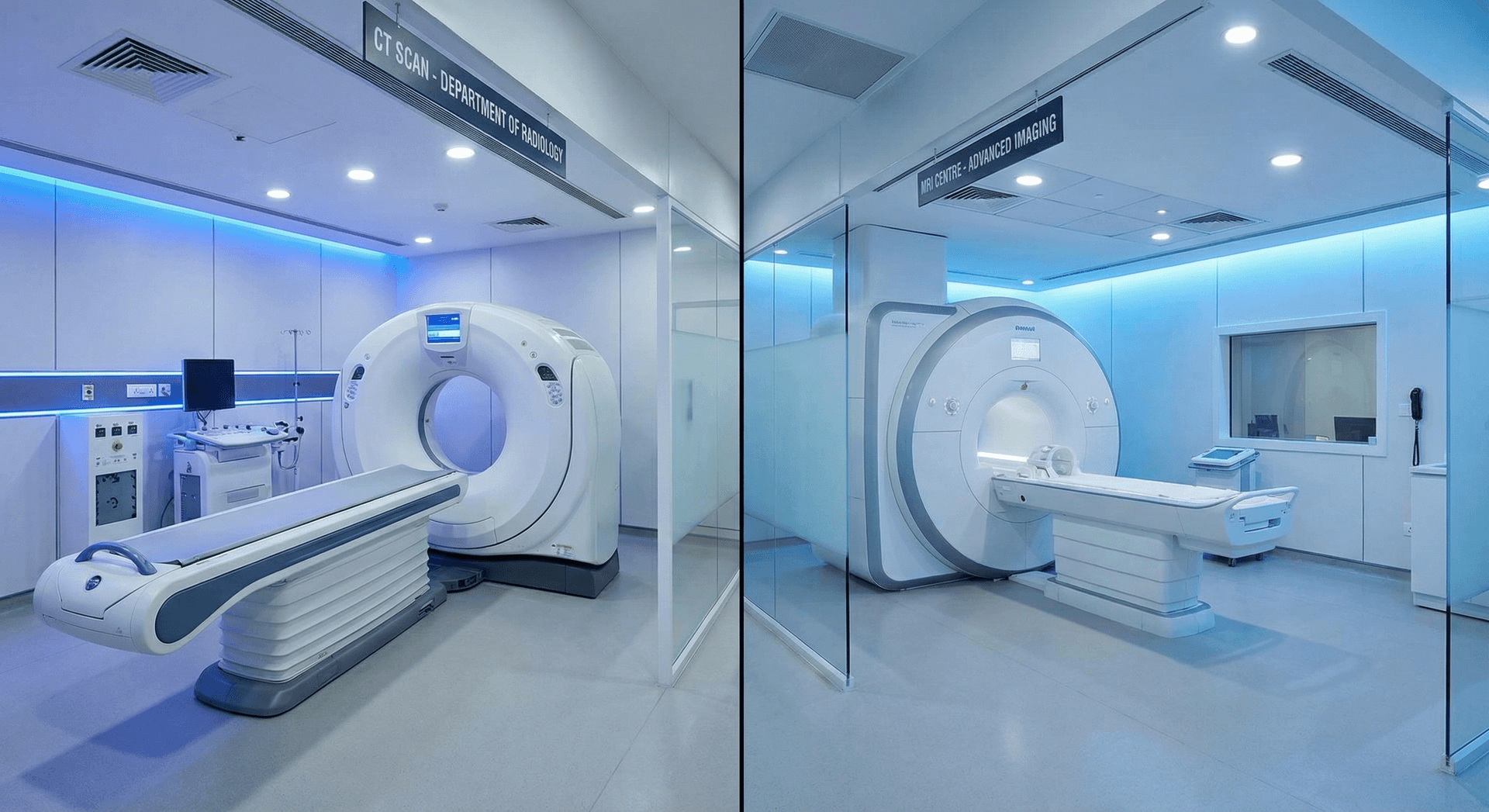
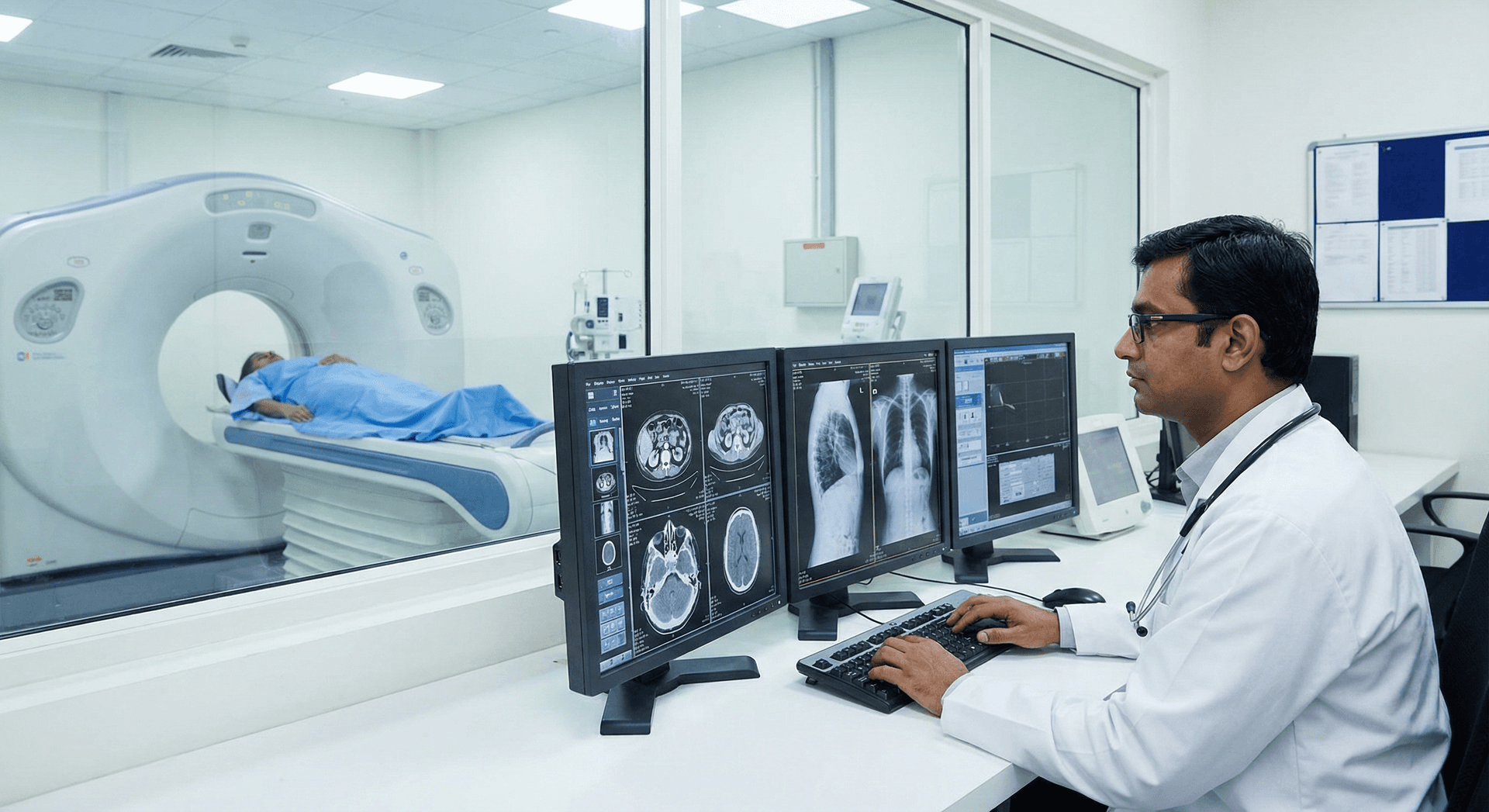
At Magnus Diagnostics, we use Ultra Low Dose 64-slice CT scanners at North Paravur and Pullur. These reduce radiation by up to 40% compared to older machines—we get the detail we need with less exposure.
Pregnancy: Why Ultrasound Wins
This is crucial. If you're pregnant and have abdominal pain, ultrasound is almost always the first test. It's completely safe at any stage—no radiation risk to the baby.
CT is avoided during pregnancy unless it's absolutely essential—like severe trauma or a life-threatening diagnosis where the benefit clearly outweighs the risk. Even then, we use the lowest dose possible and shield the abdomen.
For routine abdominal pain in pregnancy, ultrasound is the standard. It shows us the baby, the uterus, ovaries, gallbladder, kidneys—everything we need to see, safely.
What to Expect: Preparation and Procedure
Ultrasound (Abdomen):
- Fasting: Often 6–8 hours for gallbladder scans (water is okay). This ensures the gallbladder is full and easy to see.
- Full bladder: Needed for pelvic or renal views—drink about 1 litre of water 1 hour before and hold it.
- Procedure: Gel on your skin, probe moved over your abdomen. Takes 10–20 minutes. Minimal discomfort—just pressure.
- Results: Usually available immediately; report within a few hours.
CT (Abdomen):
- Fasting: Usually 4–6 hours before the scan.
- Contrast: We might give you oral contrast (to drink) and/or IV contrast (injected) for better detail. This helps us see the bowel and blood vessels clearly.
- Procedure: You lie on a table that moves through a donut-shaped machine. Takes 5–15 minutes. You'll hear whirring sounds.
- Radiation: Single scan; we use low-dose protocols to minimize exposure.
Cost and Availability: What You'll Pay
Abdominal and pelvic ultrasounds both start from ₹800 and are available at our centres in Irinjalakuda, North Paravur, and Pullur. CT abdomen scans range from ₹4,000 to ₹8,000 or more, depending on the specific protocol needed, and are available at North Paravur and Pullur.
Ultrasound is cheaper and radiation-free—often the right first step. CT costs more and uses radiation, but when we need detailed views or ultrasound isn't clear, it's worth it.
A Real Scenario: How We Decide
Let me walk you through a typical case. A patient comes in with right upper abdominal pain, especially after eating. We start with ultrasound—it's quick, radiation-free, and perfect for gallbladder issues. The scan shows gallstones. Problem solved. No need for CT.
Another patient: severe abdominal pain, fever, possible appendicitis. We might start with ultrasound (especially if they're young or thin), but if it's not clear, we go to CT. CT shows appendicitis definitively—or rules it out. The extra radiation is justified by the need for a clear diagnosis.
A third patient: obese, abdominal pain, ultrasound images are unclear because sound waves don't penetrate well. We go straight to CT—it's not affected by body habitus, and we get clear images.
The point? We don't choose randomly. We pick the test that gives us the information we need with the least risk and cost.
The Bottom Line
Ultrasound and CT both have their place in diagnosing abdominal pain. Ultrasound is radiation-free, quick, and excellent for gallbladder, liver, kidneys, and pregnancy. CT gives us detailed cross-sections when we need more information or when ultrasound isn't clear.
Your doctor chooses based on your symptoms, body type, and what we need to see. Trust their judgment—they're balancing information, safety, and cost.
At Magnus, we make both available. Ultrasound starts from ₹800 at multiple centres. CT is available at North Paravur and Pullur with our low-dose scanners.
Need an abdominal scan? Call us at +91 89031 01010 or visit our ultrasound or CT scan pages. We're here to help you get the right test at the right time.